People relate in very different ways to their medicine cabinets. Some folks will toss out anything they’re no longer using. Others hold onto every med indefinitely, even when the expiration dates have passed.
I fall into the second category. And on the Jewish holiday of Simchat Torah a few weeks ago, that tendency may have saved someone’s life.
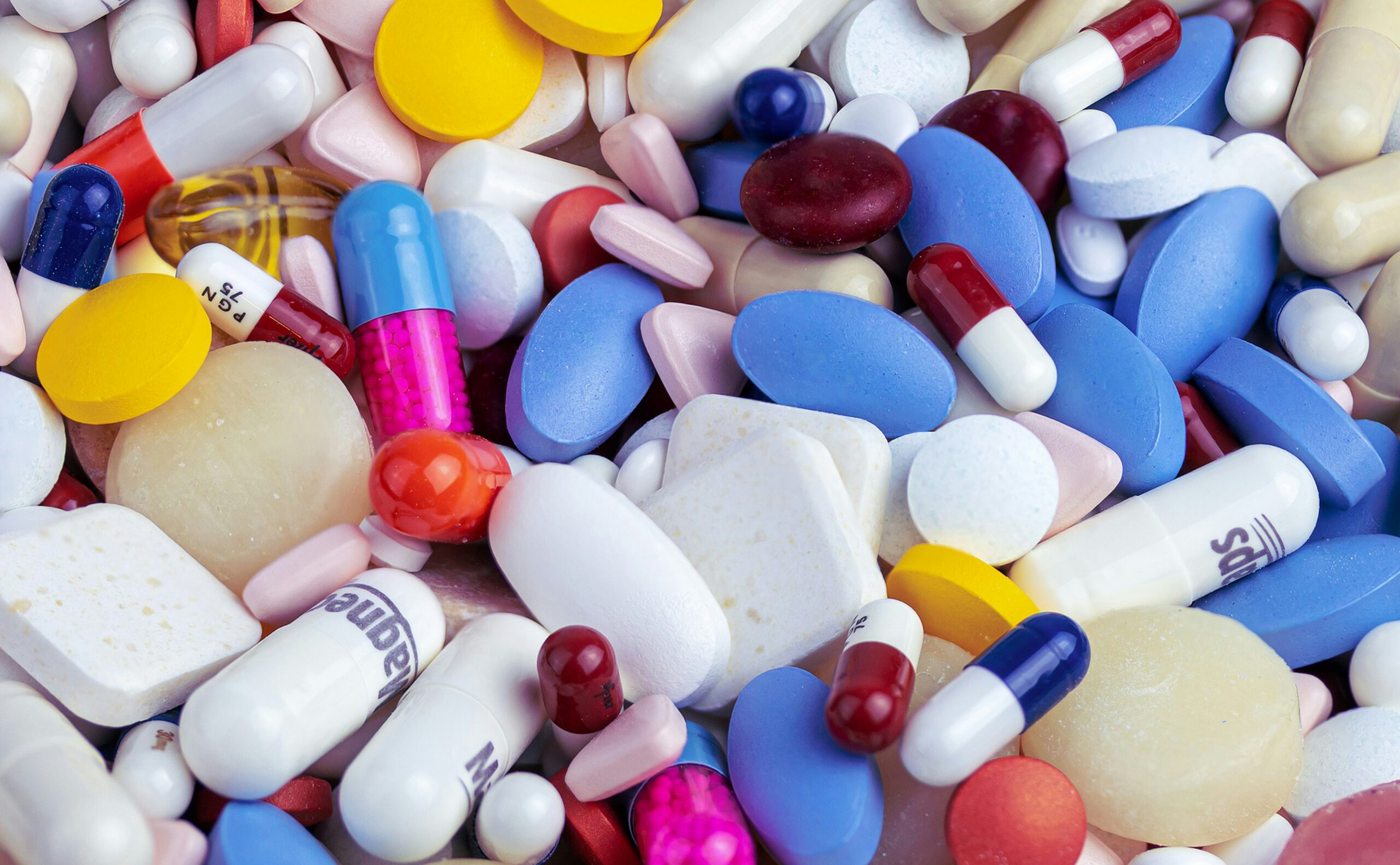
The shelves where I store my pills, potions and sprays are jam-packed – so much so that I’ve had to arrange the meds by category. There’s one box just for antibiotics. Another for bottles of medical cannabis. I store nasal sprays in a plastic bag.
The biggest box, by far, is for storing meds I took during my cancer journey. Some were specific to issues I had while hospitalized – Tamsulin after a catheter, Allopurinol to reduce uric acid that can accumulate during chemotherapy – while others are more “evergreen” which, although I’m not taking them now, I know I may need to again.
This includes a collection of opioids (Targin, Zaldiar and Percocet) which were invaluable for pain management during CAR-T and which I still use from time to time; sleeping pills (Zopiclone, Ambien and Trazodone) that I’ve since switched out for a more effective cocktail; and half-full boxes of Augmentin, Zinnat and Ciprodex to fight off lung infections and UTIs.
For meds that I continue to take on a daily basis, my wife, Jody, bought me one of those plastic pill boxes, the kind with seven slots (one for each day of the week) and four compartments per day, allowing me to stage my eleven daily meds.

We had gone to services on Simchat Torah morning at Nava Tehila, the Jewish Renewal community we’ve been members of for some 20 years. The joy spilling out from the congregation that day – which is always high energy – was even more over the top than usual as we were still buzzing from the release the day before of the 20 living hostages who had been held in Gaza for 738 days. The fact that Hamas launched its atrocities on southern Israel exactly two years before, on the same Jewish holiday, only heightened the impact.
One of the customs of Simchat Torah is to dance in circles with the Torah. At Nava Tehila, each joyous hakafa procession is assigned a “theme.” Two of these hakafot held special resonance for me.
In one, anyone who had overcome a major challenge in the past year was invited to enter the inner circle to hold the Torah scroll. I wasn’t sure I wanted to be so public about what I’d been through health-wise, but the rabbi was eyeing me specifically, so I had little choice but to comply.
The other hakafa that spoke to me was dedicated to individuals who had gone through something that nearly broke them, emotionally or physically. While the congregation danced in a counterclockwise direction, Jody and I moved slowly clockwise, where we were urged to make extended eye contact (sometimes accompanied by hugs) with the hundred-plus people holding the space. It sounded awkward but was, in the end, incredibly moving. I had tears in my eyes for much of the circle.
Jody embraced the hakafa that was dedicated to people who had performed or received some sort of chesed (kindness) over the past year – she had been a recipient of overwhelming chesed from our healing “village” while I was hospitalized, and afterward.
It was then that Ethan, a young man visiting from the U.S., accidentally ate a peanut which he didn’t notice when offered a snack bag containing what he thought were just seeds.
He was allergic to peanuts.
While his face wasn’t blowing up, nor was he experiencing anaphylaxis, where his throat could have closed down or his tongue swelled, making it difficult to breathe, he knew that could still happen – and fast.
“Does anyone have an EpiPen?” someone standing near him called out.
An EpiPen is an auto-injector that delivers epinephrine, a type of adrenaline, to swiftly counter the effects of a potentially deadly reaction.
“No, not an EpiPen,” Ethan clarified, which would explain why he wasn’t carrying one on his person, as people with severe allergies are strict to do. “What I need is prednisone.”
That’s when Jody sprang into action. She knew what I had in my medicine cabinet. And prednisone was prominent.
When I was receiving chemo last year for my lymphoma, part of the protocol included high-dose IV steroids in the hospital, followed by several days of 60-80 mg of prednisone at home. I had plenty left, in both 5 mg. and 20 mg. doses.
“We can help,” Jody approached Ethan. “Come with me, our house is only a five-minute walk away.”
Jody could have high-tailed it home and brought the meds back to services, but that would have doubled the time interval, and she didn’t want to risk Ethan waiting even a minute longer than he had to.
Ethan got my pills. Whether they helped or he was fortunate and wasn’t going to have an allergic attack in the first place (“it doesn’t always happen,” he explained to Jody), the young man made it back to the circle and we were able to continue our prayers with a clear conscience.
I’m sure I have some meds I don’t need anymore, and a few more that have probably expired, but I’m grateful that my hoarding mentality may have inadvertently saved a life.
That’s a Simchat Torah message of healing and joy neither Jody nor I are likely to forget anytime soon.
I first wrote about our Simchat Torah miracle for The Jerusalem Post.
Image of pills: Myriam Zilles on Unsplash
Image of Torah scroll: courtesy of Esther Mayim Chayim