ChatGPT has taken over my life – in a good way.
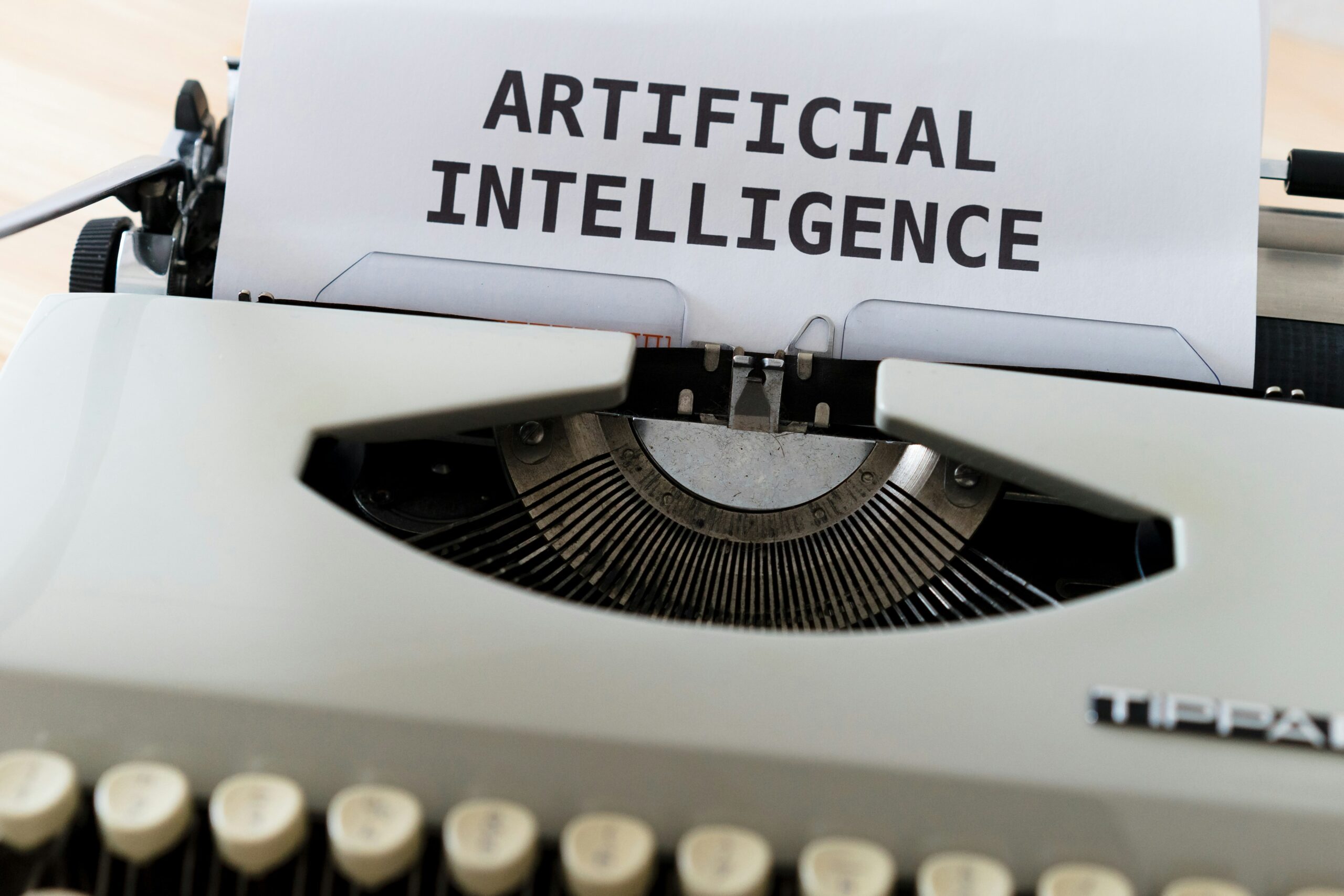
Over the last few months, I’ve started to use AI tools like those from OpenAI, Google and Anthropic for an increasingly wide variety of tasks. Some are fairly straightforward – queries about TV show plot twists, translations from Hebrew to English – while others are more radical.
The most unusual: I record my therapy sessions, use a transcription tool to output the result to text, then plug that into ChatGPT with the prompt “summarize this text while highlighting any psychological insights.” Since ChatGPT knows and remembers me, it can generate helpful spins that complement (and sometimes exceed) the therapy itself.
But where I’ve been spending most of my artificially intelligent computer time has been with my writing. Not to actually write a complete article, mind you, but if I want sources on, say, “For how long can one use expired medications?” a ChatGPT query can surface answers and links remarkably fast.
Yes, you do have to check it, as AI chatbots are famously known to hallucinate, making up answers to please the prompter, but the more details I feed into my queries through follow-up iterations, the more accurate the response becomes.
That led me to wonder whether AI could help me with a massive ghostwriting project I’ve been working on. My client and I have been Zooming regularly for close to a year to brainstorm ideas for a business book. We’ve accumulated over 600 different topics comprising an intimidating 1,000,000 words.
That has, understandably, quite overwhelmed me. How could I ever make sense of so much data?
AI to the rescue.
Google’s NotebookLM product (LM stands for “large language model”) is designed for exactly that sort of task. You feed it your source data, and with the right prompts, it will spit back a coherent organization and order.
It took some tweaking: There’s a limit of 50 sources per project (I had twelve times that many) and, being a Google product, it refuses to accept files from archrival Microsoft. But once I’d taken care of grunt work, the project began to take shape – and to make sense.
NotebookLM suggested ways to tie the opening and the conclusion together. It chunked all those topics into a manageable dozen chapters. It wrote sample text. Eventually, I was able to generate a two-page executive summary to share with my client.
He loved the result. And why not? From his end, it was all familiar from our Zoom meetings. But from where I was sitting, it was a towering stress reducer. Now, I could simply follow the blueprint created by AI – and write.
Still, I worried that, when I sent that summary to my client, he might think to himself, “Gee, why do I need Brian? I’ll just let AI finish the book for me and save the hefty ghostwriting fees.”
Indeed, notes Lulu Meservey, former VP of communications for Substack and current CEO of PR firm Rostra, AI will be “very good at writing and the improvement could come very quickly.” We need to “prepare ourselves for that to happen.”
Newsweek is already getting ready. The magazine says it “is experimenting with AI-based tools to help journalists work faster, smarter and more creatively. But such tools must be used in an ethical way and under the full supervision of journalists.”
I assumed – erroneously, it turns out – that my newspaper colleagues would be writing purists, adamantly against any use of AI in their craft. A quick survey found that they all are using AI to one extent or another, from translating copy from other languages to writing and structuring interview questions.
I decided to try an experiment: I’d ask AI to actually write a chapter-by-chapter first draft of the book. It did a passable job but subsequently required hundreds of clarifying queries and substantial post-prompt editing. I’m happy to say that it was still my writing in the end; if I had submitted an exclusively AI-written book, it would have been embarrassingly mundane.
Can AI work for fiction? I’ve been noodling for years now on a science fiction book idea. It, too, has overwhelmed me.
Dr. Tuhin Chakrabarty, a Columbia University computer scientist, trained several large language models on the writing of a particular fiction author Han Kang, a Nobel laureate. Chakrabarty uploaded all of Han’s work, then fed the AI a description of a certain scene from Han that Chakrabarty had not included and asked the AI to generate it in the author’s style.
Chakrabarty next tasked several creative writing graduate students to complete the same mission. When he challenged a second group of students to compare the versions in blind tests, they “universally preferred the AI version to the imitations their peers had come up with,” The New Yorker’s Vauhini Vara reports. In another test, the readers “preferred the quality of the AI output in almost two-thirds of the cases.”
That gave me the courage to ask ChatGPT to brainstorm with me on my science fiction proposal. The AI came up with new story arcs and compelling plot twists. It suggested additional characters and even a love interest for my protagonist. Will I ask it to write a first draft? I haven’t decided yet.
But the bottle has clearly been uncorked, and the genie is not very quietly leaking out. While this may mean some people will find their employment trajectories severely curtailed, for all of us, our jobs will certainly change with the ascendency of the prompt. For writers, intensive editing will become as important as any initial out-of-the-box composing.
I decided, as a final task in my exploration, to ask AI the role it envisioned for itself in all this. “AI may never be a true ‘friend,’” ChatGPT demurred, “but it can be a real creative partner.”
That retort is no hallucination.
I first wrote about how I use AI for writing in The Jerusalem Post.
Photo by Markus Winkler on Unsplash