Here’s news I know many readers have been anxiously awaiting: The CAR-T was a success! My 30-day and 90-day PET CTs both showed “no uptake” of the radioactive dye injected as part of the scanning process. For the first time in seven years, I am cancer-free.
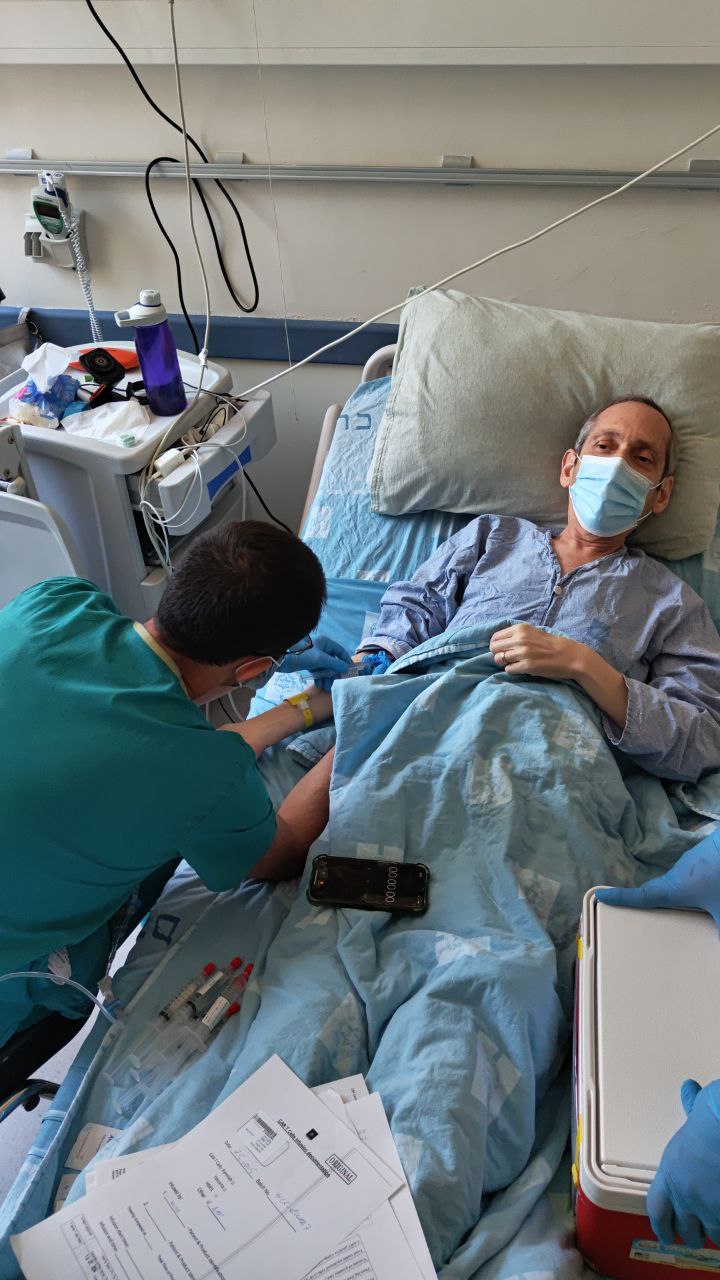
I have known the CAR-T worked for several months now, but I wasn’t ready to share it. First, because the gold standard is that there are no signs of lymphoma over the course of two PET CTs and, second, I was worried that the bladder lesions I wrote about previously could have been malignant. Pathology has now confirmed it as “severe chronic inflammation,” unpleasant for sure, but not cancer.
This seemed like a good time for a short “CAR-T explainer.” I’ve dribbled out bits and bobs of information over the past year on how this sci-fi treatment works, but the actual miracle is worth spending a few more minutes on.
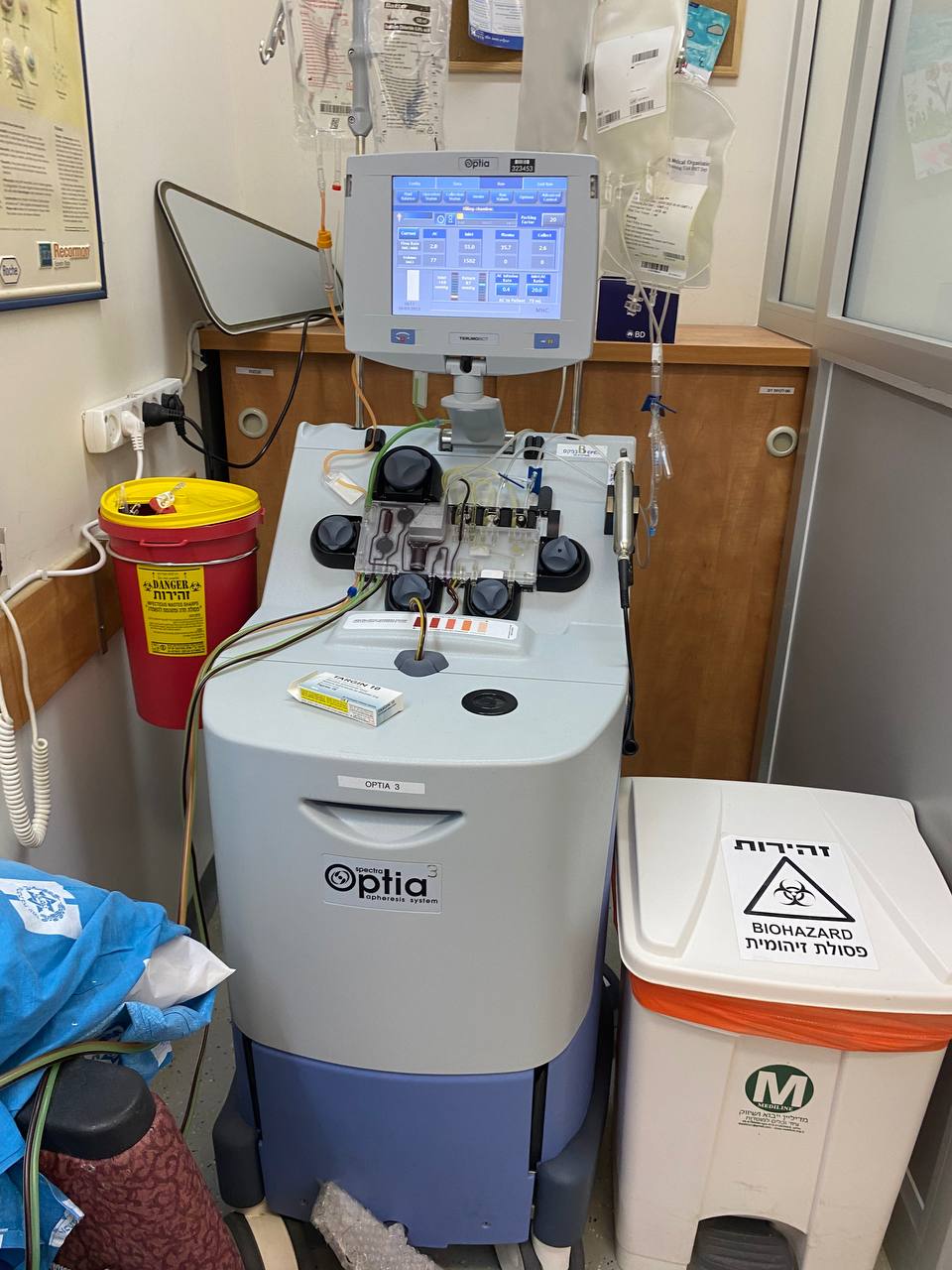
A form of immunotherapy, the CAR-T process starts when millions of your own T-cells are extracted via IV, then sent to a lab to be re-engineered to include a “CAR” – a “chimeric antigen receptor” – on the T-cell.
All cells have molecules called MHCs (short for “major histocompatibility complex”) on their surfaces. If a cell is cancerous, it sends small protein fragments to display on the MHCs. This signals the immune system that the cell is abnormal and should be eliminated.
But cancer cells are sneaky, and they can hide the MHCs from the immune system.
That’s where the CARs come in – they can directly recognize tumor antigens without needing to locate the MHC molecules. Once a CAR-T cell locates and binds to a cancer cell, it kills it and then, remarkably, proceeds to make more CAR-Ts, not in the lab this time but in the patient’s own body.
CAR-T causes less collateral damage to healthy cells than standard chemo. And, remarkably, it works in a matter of weeks.
The treatment has side effects, of course, some quite dangerous. The worst is the dreaded CRS – a “cytokine release storm” – which was the main killer when Covid-19 first appeared and we knew very little about how to fight it. A CRS is basically your immune system going into overdrive trying to get rid of what it perceives as a malign foreign body.
I got a CRS – it was stage three, and I was on oxygen and tocilizumab, an anti-CRS med, for a week, which thankfully knocked out my high fever. That’s one reason Israeli hospitals insist you stay as an inpatient for a minimum of three weeks. In other countries, CAR-T is often administered outpatient with the recipient residing in a nearby hotel. But if you get a CRS, you’re admitted to the ICU. I had my own private isolation room on the Bone Marrow Transplant ward the entire time.
The weirdest side effect: CAR-T makes your pee smell like corn.
The first week you’re in the hospital, you receive three days of lympho-depleting chemo to totally trash your immune system so the CAR-T cells can do their work.
Then for two weeks after, the doctors monitor for CRS along with ICANS (Immune Effector Cell-Associated Neurotoxicity Syndrome) – a usually temporary predicament where you suffer cognitive impairment. Twice a day, I was asked to count down by tens from 100 to zero. I was always able to do it.
I almost didn’t get the CAR-T – the lab that received my T-cells for re-engineering was initially unable to attach the CARs to them; my cells were too diseased and full of chemo, they explained. Instead, my hematologist recommended I enroll in a clinical trial for “allo-CAR-T” where they use off-the-shelf, cancer- and chemo-free T-cells from anonymous donors, rather than your own.
That company was concerned, however, because they didn’t want any complications when they presented their preliminary findings for FDA approval. I already had a nephrostomy tube coming out of my right kidney while my left kidney no longer functioned, which meant I was far from a “simple case.” I also had “high tumor burden,” meaning essentially, I had a lot of cancer in me – harder for CAR-T to treat.
I was turned down.
As my body flailed and my wife, Jody, fretted, the original lab that hadn’t been able to re-engineer my cells, reported that they had succeeded. Fifty million of my cells were on their way to Israel! That was only half of what they usually like to make, but apparently it was enough.
I was hospitalized for a total of six weeks during which time I was so weak I could barely get out of bed. We hired a foreign worker to watch over me and help me to the bathroom.
CAR-T is not cheap – in the U.S., it can run up to $1 million when you factor in the hospital stay, personnel and follow-up. The medicine itself runs between $370,000 and $475,000. That said, CAR-T has probably the best profile of any blood cancer drug for inducing a medium to long-term remission, which occurs in about two-thirds of patients.
CAR-T currently only works well for blood cancers like mine, which include lymphoma, leukemia and multiple myeloma.
Researchers are hard at work to make CAR-T effective for solid tumors. In the meantime, there’s hope that it will become a first-line treatment, displacing chemo entirely, and giving people like me years of “progression-free survival.”
While I know my cancer most likely will return someday (that’s the tragic nature of lymphoma), hopefully that won’t be for a long time and, by then, less abrasive and even more effective treatments will become available.
Or maybe I’ll be among the fortunate 30% of patients for whom cancer never comes back.
I first explained CAR-T in The Jerusalem Post.