What do the Trump plan for Gaza, hiking Nahal Katlav in the Jerusalem Hills and getting CAR-T treatment for cancer have in common? They’re all representative of non-linear processes that are characterized by frequent ups and downs.
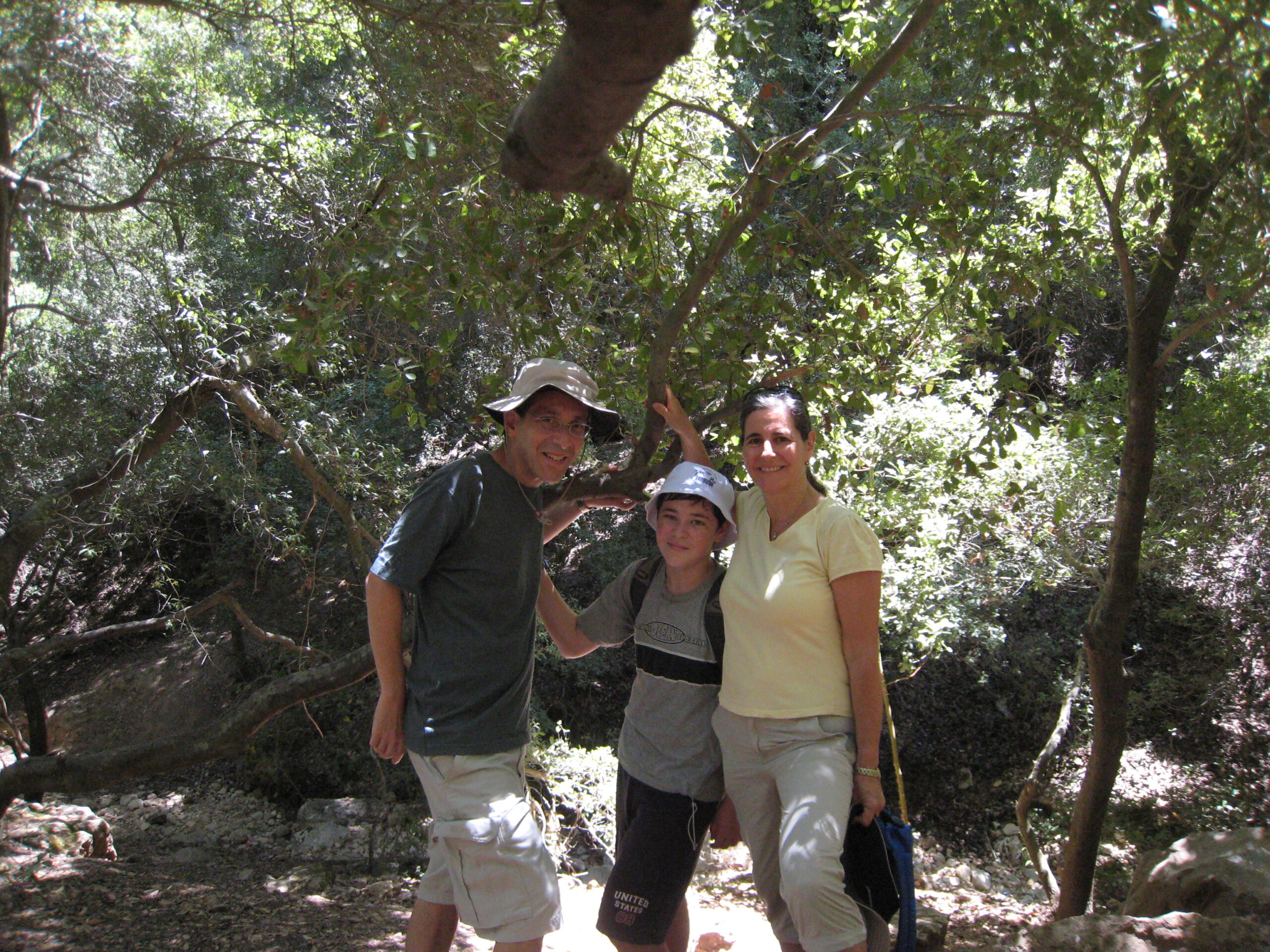
Viewing life this way is an idea I’m trying to incorporate into my personal, professional and even political perspectives.
My thinking on this started with an episode of Ark Media’s “For Heaven’s Sake” podcast in which hosts Donniel Hartman and Yossi Klein Halevi discussed how the ceasefire and rebuilding of Gaza is going to be a “process … [one that’s] “going to take time.”
Disarming Hamas, reconstituting Gaza, getting other Middle Eastern nations on board and expanding the Abraham Accords are all things I want to happen now. But we need patience. Nothing is about to be definitively solved tomorrow.
“It’s going to be day by day,” Hartman told a somewhat skeptical Klein Halevi, or even “month by month for us to be able to see whether we’re achieving what we hoped for.”
Political, along with societal, change is notoriously slow. It’s not a switch or a quick fix. Will a ceasefire and the return of hostages result in a reduction in antisemitism and an end to boycotts, so that international musicians will play again in Israel and Jewish authors won’t be banned from bookstores in Brooklyn?
Over time, I’d like to think so, but long-term processes are more about embracing “a cycle of endless refinement and continuous improvement,” University of Baltimore economist Prof. Barry Brownstein writes. At best, there will be incremental wins.
Having patience with the inherent ups and downs is essential to the joy of hiking, too. Some stretches will be easy, while others are brutally uphill, but it’s all still one hike.
I mentioned Nahal Katlav, which has long been one of our family’s favorites. You start near Bar Giora and descend into a tree-lined valley.
But what goes down must eventually come up. And that “up” is particularly tough. At one point, you’re literally scrambling up rocks on the side of the mountain with little to hold onto. Unless you have two cars and can park one at the bottom, or you’re someone who strives for a strenuous challenge, you have to accept the good with the bad. Otherwise, you’ll miss out on some of this country’s most stunning scenery.
That maps to my experience recovering from CAR-T, the cancer treatment that kept me in the hospital for six weeks earlier this year. I knew I needed to do it, yet the recovery has been longer and more difficult than I’d anticipated; it’s been more than six months since my discharge, and I am still fatigued, immunocompromised and haven’t been able to regain the 15 kg I lost along the way.
That’s when my impatience kicks into overdrive. I want to get back to the man I was. I want to do more than watch TV every night. I want to travel again. I want to be able to eat my favorite foods without feeling nauseous. I want to push my grandchildren on the swings in the park. I want to get back on our elliptical machine.
I’m confident I eventually will. Just not yet – it’s a process. Some days I can walk for an hour with my arms swinging briskly. Other days I can barely get out of bed. And I never know which day it’s going to be when I wake up. Healing is unapologetically non-linear.
My body is akin to hiking Nahal Katlav. Sometimes you’re tired and sometimes more energized. A change in language is key here. Say: “I am in a healing process” rather than “I’m frustrated that I’m not already fully healed.” Can I visualize healing as a graph, an upward trend, rather than “I must be ‘fixed’ by such and such a date.”
The hike metaphor also works as a tool to interrupt the destructive loops of grief and control-seeking I periodically find myself falling into. If I push hard enough – on doctors, on my wife, on myself – I think maybe I can force my healing to arrive faster. Reframing it as a hike is thus a way of reminding myself that “awful today” doesn’t mean “failed forever.” It provides a mental handhold that stops the spiral. I can say, “This part is a vertical scramble. I’ve done scrambles before. Scrambles end.”
There’s one more way to understand and manage impatience. We as modern, Western adults have gotten used to life running smoothly. So, when change doesn’t happen in an instant, we feel furious, like reality has sabotaged some unwritten contract.
“Why isn’t life doing what I ordered?” we ask ourselves. But life doesn’t work like DoorDash or Wolt. And even those amazing delivery services sometimes suffer delays and disappointments. The motorcycle breaks down. The pizza is undercooked. Not everything – perhaps very little, indeed – is in our control.
Similarly, when I’m at my computer and the Internet goes out. I curse the fiber provider, forgetting the blessing of how I now have access to essentially all the information in the world, literally at my fingertips.
Thinking in terms of ups and downs might sound trivial, like a bad cliché. Doesn’t everyone know that’s how the world works? Apparently not. Thinking about health in particular – not to mention the political meandering endemic to our increasingly populist governments – as a hike, with unavoidable ascents and descents, and painfully slow change, has helped me calm down, to feel less wronged and angry.
Life is not a straight, flat road, but “patient hiking” is definitely worth it.
I first wrote about patient hiking for The Jerusalem Post.