The hardest part was the waiting.
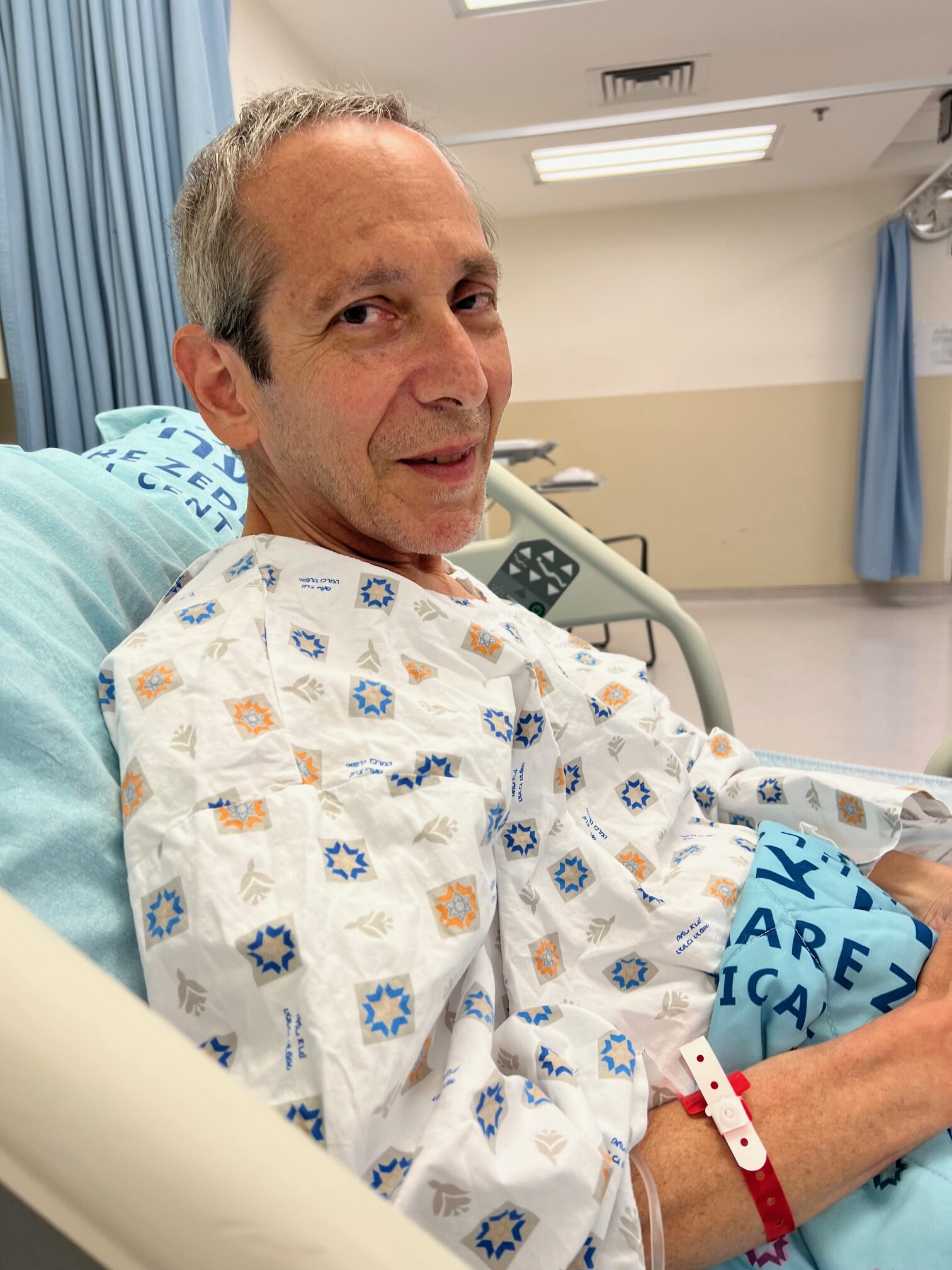
I was at the hospital, prepared to be called into surgery for a procedure that would biopsy some small lesions on the lining of my bladder. I had been told to start fasting at 9:30 am (as the procedure was to be done under general anesthesia) and to arrive at the medical center by 1:00 pm.
I wasn’t taken into surgery for another seven hours, by which time I was hungry, weak and frustrated. No one on the staff could (or seemed to be willing to find out) when the surgery would start.
The procedure itself was uneventful, but my wife, Jody, and I were perturbed by what seemed to be a pervasive lack of communication.
That got me wondering: Was this just the way that hospitals and surgeries work? Or was there a shortage of doctors contributing to the delay and inability to share basic, comforting information to an anxious patient in pain?
It’s no secret that some of Israel’s best and brightest have left the country. A shocking report released last month by the Knesset’s Committee for Immigration, Absorption and Diaspora Affairs revealed “a decline of 125,000 people from the country’s migration balance since 2022,” according to The Jerusalem Post. Committee chairperson MK Gilad Kariv dubbed it “a tsunami of Israelis choosing to leave the country.”
Specifically, in 2022, Israel’s population decreased by 29,700 citizens due to emigration, Dr. Ayala Eliyahu, from the Knesset’s Research and Information Center, noted. (The website Statista disagrees, showing an increase in total population during 2022.) In 2023, it was 58,600, and in 2024 up to August, another 36,900 Israelis left. The same Knesset agency also reported a 53% drop in returning residents between 2020 and 2024.
Rotem Shtarkman and Ronny Linder of Haaretz spoke to Prof. Gil Fire, deputy director of Tel Aviv Sourasky Medical Center in 2024. Their topic was the impact of emigration, specifically on the medical system. “Something is happening to us that didn’t happen in the past,” Fire admitted.
In particular, after October 7, he said, a phenomenon of “silent departure, under the radar” has been occurring. “It’s not vociferous, not explicit…they’re disguising it.” But unlike before the war, “this time the leaving is large-scale and it’s significant.”
Fire described three scenarios affecting the medical community. One is physicians who are sent by hospitals in Israel abroad on fellowships for a year or two. Most of them return with enhanced experience that improves medicine in Israel. Sometimes they delay their return but only a few don’t come back at all.
A second group is physicians who move abroad because their spouse receives a compelling job offer with a substantial salary.
A third group – the smallest, Fire said – simply leave with no job offer at all. “All of them are Zionists, patriots, most of them did military service and they are ashamed they will not be living in Israel.”
The phenomenon of physicians leaving the country gained momentum in 2023 with the launch of the judicial reform. A WhatsApp group for doctors seeking advice on relocating overseas was formed, attracting some 3,000 physicians.
That prompted Health Ministry Director-General Moshe Bar Siman-Tov to publicly urge doctors not to “give up” on Israel’s public health system. “Stay here and you will be part of setting the rules by which it operates,” he said.
Nor is finding a job overseas a piece of cake, another Israeli physician I spoke with told me. He trained in Israel and spent three years in the U.S. on a surgical fellowship. “It’s not that easy to just start practicing. There are a lot of licensing requirements. The U.S. wouldn’t recognize my credentials and let me just stay and start practicing. I would have had to retrain.”
My hematologist at Hadassah believes the issue of medical emigration, while real, is overblown, fueled more by headlines than by reality. “I’ve received numerous calls by reporters begging me to say that I’m leaving the country because of the situation. I’m not going anywhere.”
The results of Israel’s next election may have a more significant impact. A survey published by the N12 news site’s Magazine found that every sixth Israeli (not just doctors) said they would consider leaving the country, depending on the results. The Jewish People Policy Institute reported in 2024 that political turmoil has led one in four Jewish Israelis to say they would emigrate “if given the opportunity.”
Israel has suffered from a shortage of physicians long before recent events. New medical schools in Safed and Ariel are now operating to help increase the supply of medical personnel. The Israeli government also offers grants of up to NIS 400,000 to encourage foreign doctors to immigrate if they will work in the Negev or Galilee regions.
The results are encouraging: Since October 2024, the number of new immigrants stands at 53,765, according to the Aliyah and Integration Ministry, which added that 519 new doctors immigrated to Israel in 2024. Following a Nefesh b’Nefesh-sponsored “Medex” job fair held in New Jersey earlier this year, close to 100 applications from doctors asking to transfer their medical licenses to Israel were received. Another 100 doctors attended a similar Medex event in London.
I’d be negligent if I didn’t point out that Israel’s medical system remains one of the best in the world. The crossover between HMOs, hospitals, universities and startups ensures we have the world’s most cutting-edge technologies. In the six years I’ve needed cancer treatments, I’ve never been denied a medicine or a procedure, a practice in which insurers in the U.S. seem to delight.
I am hopeful that any looming medical brain drain can be staunched before the bleeding becomes an irreversible crisis. As with most Israelis, my patience has, from time to time, been severely tested, but I refuse to lose hope.
I first wrote about the impact of emigration on the Israeli medical system for The Jerusalem Post.